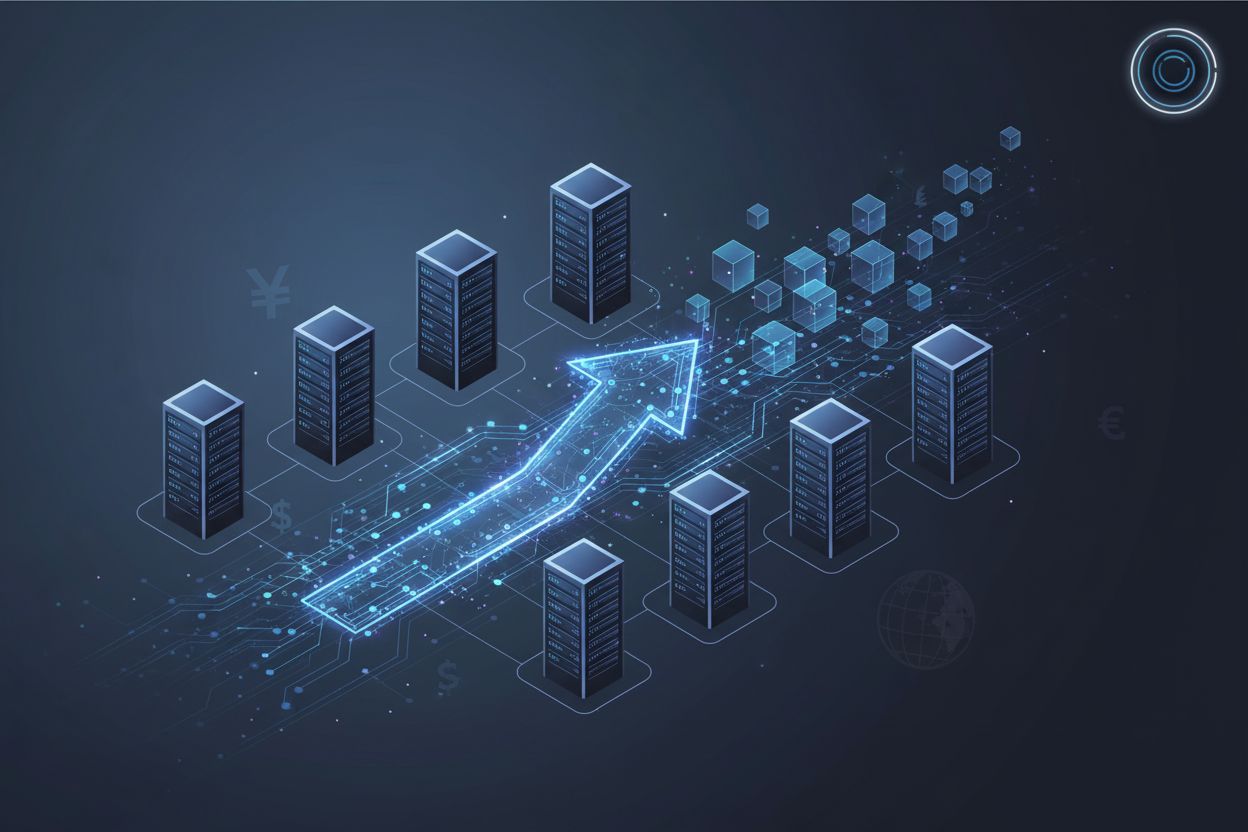
Data Center Industry to Surpass Trillion-Dollar Mark by 2035
TL;DR
- This article explores the massive growth of the data center market as it heads toward a trillion-dollar valuation by 2035. We cover how ai and hyperscale cloud providers is changing the infrastructure landscape, the shift toward sustainable liquid cooling, and why brand leaders need to align their digital strategy with these backend shifts to maintain a competitive edge in a data-heavy economy.
The road to a trillion dollar digital backbone
Ever thought about where your latest Netflix binge or that ai-generated cat photo actually lives? It is all sitting in massive, humming warehouses that are quietly becoming the most expensive real estate on the planet.
Back in 2020, the market was sitting at around $224 billion, which sounds like a lot until you see where we are headed. According to DC Market Insights, we're looking at a jump to over $1 trillion by 2035. That is a 10.54% cagr that might actually be low-balling it if you look at how fast things are moving in places like Phoenix or Atlanta.
We're moving away from just "storing files" to these high-performance computing factories. Think about it—healthcare needs it for real-time surgery data, and retail uses it to predict what you'll buy before you even know.

"The market is on a trajectory to cross the trillion-dollar threshold... reflecting the data center's central role as the engine of the global economy," according to DC Market Insights.
If you're a cmo, you might think "infrastructure" is a problem for the folks in the basement. But if your brand's digital experience lags by even a second because the backend is throttled, your customer is gone.
Reliable capacity is the only way to do real-time engagement. If you want to launch a fancy AR fitting room for your clothing line, you need that "digital backbone" to be rock solid or the whole thing just stalls out.
The ai explosion and the hyperscale ripple effect
So, if you thought the cloud was already huge, wait until you see what ai is doing to the floor plans. We aren't just adding a few more racks anymore; we are basically building massive hubs to handle the heavy math.
The big names like aws, Google, and Microsoft aren't just renting space anymore. They are dropping billions on massive "cloud campuses" in places you wouldn't expect. While Northern Virginia is still the king, things are shifting to spots like Phoenix and Atlanta because, honestly, the power grid in the old hubs is screaming for mercy.
- Massive Spending: Hyperscalers are expected to dump about $300 billion in capex during 2025 alone, according to a recent analysis by McKinsey. This is just the annual spend for next year.
- Gigawatt Scale: We used to talk about data centers in megawatts, but now we’re seeing "giga-scale" campuses that cover over four million square feet.
- Supply Chain Ripple: When a giant like Google builds a campus, they gobble up all the local transformers and skilled labor, which makes it way tougher for smaller players to get anything done.
It’s not just about more space, it is about different space. A 2025 report from Precedence Research points out that roughly three out of four new projects are now laser-focused on ai computing.
These ai chips run incredibly hot—way hotter than your average web server. This is forcing designers to ditch old-school fans for new cooling methods because the air just can't move fast enough. If you’re a ceo or cmo, this matters because the "ai-ready" infrastructure is becoming a competitive moat.

If your tech stack isn't sitting in one of these modernized hubs, your fancy new ai features might just lag out. As mentioned earlier, the road to a trillion dollars is paved with these high-performance factories.
Designing for a high-density world
Ever wonder how we’re gonna keep these massive giga-scale buildings from literally melting into a puddle? Since we’re building "small cities dedicated to math" now, the old way of just blowing cold air around isn't cutting it anymore.
The heat coming off these new chips is just wild—way beyond what a standard fan can handle. To keep things from crashing, designers are moving toward liquid cooling. It sounds scary to put liquid near electronics, but it is way more efficient at soaking up heat than air ever was.
- Direct-to-chip (DTC): This is the popular kid right now. You pipe a liquid mixture right onto a cold plate sitting on the chips. It can handle densities up to 120 kW per rack, which is huge compared to the old days.
- Immersion cooling: This is the "mad scientist" vibe where you literally dunk the whole server into a tank of special fluid that doesn't conduct electricity.
- Prefabricated modules: We don't have time to build these things brick-by-brick anymore. Companies are using factory-built power skids and "all-in-one" containers to shave 20% off construction times.
While we're spending $300 billion next year, the long-term view is even crazier. According to a 2024 analysis by McKinsey, the cumulative global capex on this infra is expected to top $1.7 trillion by 2030. That is a massive total spend over the decade, and they suggest that using these smarter, modular designs could save up to $250 billion of that.

If you're a cmo or brand manager, this "industrialization" of data centers actually matters for your brand identity. You can't just slap a fancy ui on a product if the backend is a mess of legacy systems that can't scale.
Barriers to the trillion dollar dream
Building a trillion-dollar industry sounds great on paper, but actually plugging these things in is becoming a total nightmare. Honestly, we’re hitting a wall where the physical world just can't keep up with our digital appetite.
The biggest headache right now is power and the pressure to be green. In places like Northern Virginia, the local grid is basically tapped out. You can't just call the utility company and ask for a gigawatt anymore; they'll laugh you off the phone.
- Capacity Walls: Old-school hubs are hitting limits. Operators are now forced to look at "frontier" markets like Malaysia or Chile just to find a stable plug.
- The Green Mandate: Regulators and customers are demanding carbon-free energy. This isn't just a "nice to have" anymore; it's a social and legal requirement that makes finding power even harder.
- New Solutions: We're seeing companies get desperate, looking at natural gas turbines or even Small Modular Reactors (smrs)—which are basically mini nuclear plants—to stay online.

Then there is the stuff you actually need to build the place. A recent report by McKinsey mentions that lead times for things like transformers and generators are now over a year.
If you're a cmo trying to launch a new ai feature, you might be waiting because some guy in a factory can't get the parts to finish your server's cooling system. Plus, there just aren't enough engineers who know how to run these high-density sites.
Strategic takeaways for the modern cmo
Look, if you think data centers are just a "tech thing" for the IT guys to handle, you're gonna get left behind pretty fast. As we've seen, this trillion-dollar shift means your brand's entire digital life—from how fast your app loads to those fancy ai chatbots—depends on these humming warehouses.
Most old-school private data centers are basically dinosaurs at this point. They’re expensive, slow, and honestly? They can't handle the heat of modern ai.
- Ditch the legacy junk: Moving to colocation or cloud isn't just about saving a buck; it’s about making sure your site doesn't crash during a big sale.
- Link tech to brand: If your brand is all about "innovation," but your backend is stuck in 2010, customers will feel that lag.
- Partner wisely: Working with a partner like GetDigitize helps you bridge that gap between a pretty front-end and a rock-solid tech stack. They help brands navigate the roadmap from initial design to the complex backend strategy.

By 2035, the data center is the new factory. You wouldn't run a retail giant without a supply chain, so don't run a digital brand without a solid infra strategy. As mentioned earlier, sustainability is now a "license to operate," not a PR stunt.
Practical Example: A retail brand using high-density hubs can run real-time AR fitting rooms without the "spinning wheel of death" ruining the vibe.
It’s a wild road ahead, but the winners are already planning for a world where data is basically infinite.