Differences Between Digitalization, Digitization, and Digital Transformation
TL;DR
- This article covers the technical and strategic gaps between converting files and changing your entire business model. You will learn why most brand managers fail by confusing simple data entry with actual digital innovation. We break down the evolution from analog assets to automated workflows and finally to a brand-first transformation that creates real market value.
The jargon trap: why cmo's get it wrong
Ever feel like everyone in the boardroom is speaking a different language while using the exact same words? It's honestly exhausting how often "digital transformation" gets thrown around as a catch-all for everything from buying new laptops to reinventing a business model.
The biggest trap for a ceo or cmo is thinking these three terms are just synonyms. They aren't. Before we spend another dime, we need to get the definitions straight:
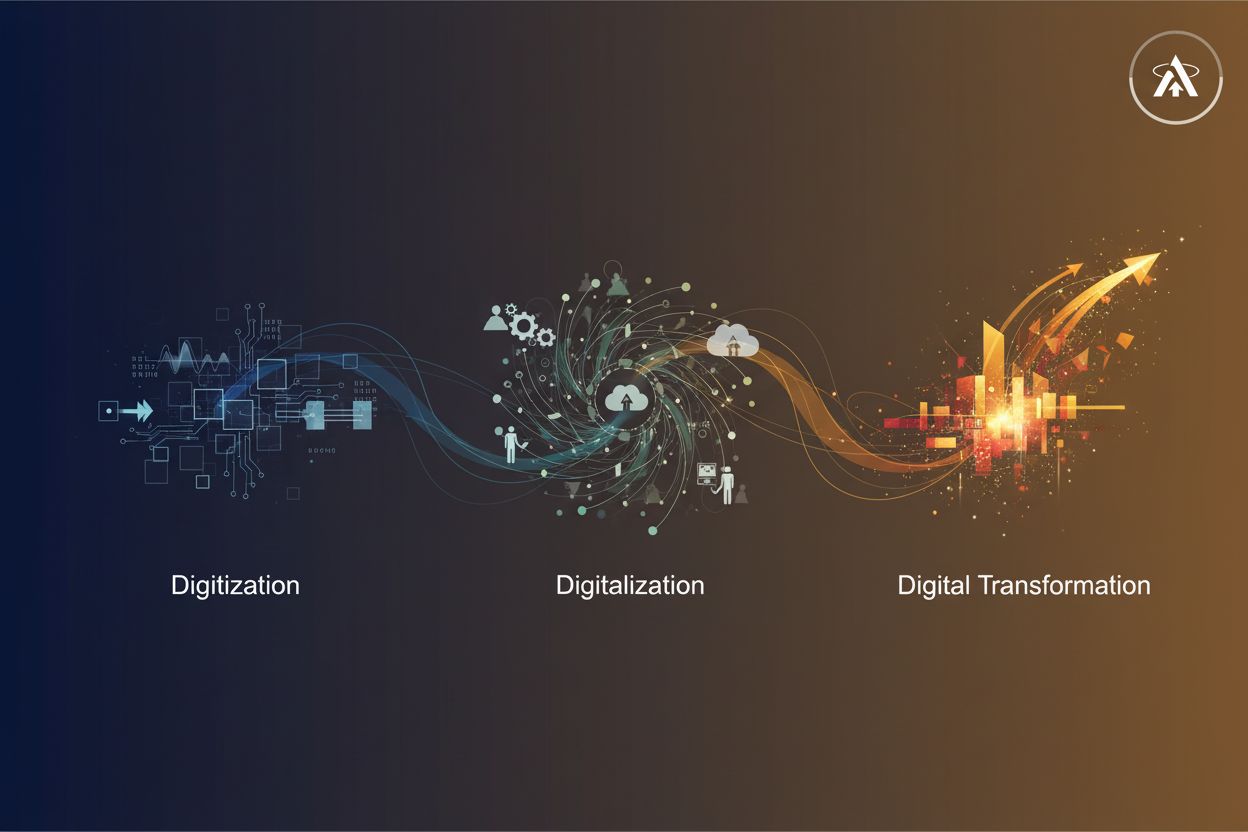
- Digitization: Converting physical stuff (like paper) into digital bits (zeros and ones).
- Digitalization: Using those digital bits to make a specific process or workflow better and faster.
- Digital Transformation: A total cultural shift that changes how your entire business creates value for customers.
If you tell your board you're "transforming" when you're actually just scanning old files, you’re setting yourself up for a massive budget disaster and a whole lot of confused looks from your tech team.
- Mixing up terms ruins your budget: You might over-invest in expensive "transformation" consulting when all you really needed was a better way to handle digital files.
- Brand consistency takes a hit: If your team thinks "digital" just means social media posts but the backend is still manual paper trails, the customer experience is going to feel broken and clunky.
- Culture change gets stuck: Real change happens when people understand why the tech is there, not just that a new app appeared on their phone.
According to a foundational 2021 study by Boston Consulting Group, only about 35% of digital transformation efforts actually succeed. Usually, it's because the strategy is a mess or leadership isn't aligned on what they're actually trying to fix. This insight still holds true today—tech doesn't fix a lack of vision.

Take a look at healthcare; digitizing patient records is great, but true transformation is using ai to predict patient risks before they even walk in. (Artificial intelligence in healthcare: transforming the practice of ... - NIH)
With the foundation laid, let's look at the actual first step of all this: digitization.
Digitization: just the basics
So, let's talk about digitization. Honestly, it's the most basic part of the whole tech puzzle, but people still trip over the word constantly. Think of it as the "digital enablement" phase—you aren't changing how you do business yet; you're just changing the format of your stuff.
At its heart, digitization is just taking something physical or analog and turning it into bits and bytes. If you scan a paper invoice to a PDF or rip an old CD into an mp3, congratulations, you've digitized. You haven't "transformed" your company, you just made your files easier to find on a hard drive.
- Paper to bits: Converting physical records into digital files like WORD or PDF so they don't take up literal room in a dusty warehouse.
- Legacy modernization: Moving old, disconnected systems into a format that a modern computer can actually read.
- Asset scanning: Taking brand logos from old print flyers and getting them into a high-res digital format for your website.
According to Agility CMS, digitization is the essential backbone for data recording because it organizes info into units called bits (zeros and ones) that computers can actually process.

It's all about preservation and accessibility. If you have a digitized book, you can search for a keyword instead of flipping through five hundred pages. But remember, just because you have a digital version of a document doesn't mean your workflow is efficient. You've just laid the foundation.
Moving from data to process, once you've got your data into a digital format, you can actually start doing something useful with it. That brings us to digitalization.
Digitalization: making data work for the brand
If digitization is the foundation, then digitalization is where you actually start to see a return on all that scanning you did. It’s the difference between having a digital map on your phone and actually using it to find a faster route through traffic.
Honestly, most people get this mixed up. They think having a pdf means they’re "digital," but that’s just the start. Digitalization is about taking that data and making it work for your brand, your team, and your sanity.
At this stage, you’re looking at your everyday workflows and asking, "Why am I still doing this manually?" It’s all about using tech to improve how work gets done. You aren't changing the whole business model yet—that's for later—but you're making the current one way more efficient.
- martech and automation: Instead of a marketing manager manually sending every welcome email, you use a tool like Mailchimp or HubSpot to trigger them based on user behavior.
- smart data usage: According to GlobalSign, digitalization is about processing info to improve workflows, like using customer data to automatically generate insights on how people shop.
- cloud collaboration: Moving your brand assets from a local server to a cloud-based system so your creative team in London and your social media manager in NYC can actually work on the same file without emailing "v2_final_FINAL.jpg" back and forth.

Think about banking. It used to be that you had to walk into a branch to move money. Now, banks use your digitized account info to let you do real-time transfers on an app. That’s digitalization in a nutshell; the service is the same, but the process is way smoother.
Another classic example is netflix. Back in the day, they started by digitizing their inventory list, but digitalization happened when they used that data to manage their mail-order DVD logistics. They didn't change the movie industry yet, they just made the process of getting a disc to your house way more efficient.
Now that your processes are running like a well-oiled machine, you can start thinking bigger. We're talking about the big one: digital transformation.
Digital Transformation: the big cultural shift
Look, if you've been scanning files or automating your email flows, you’re doing great. But let's be real—that isn't digital transformation. Moving to a "digital first" mindset is less about the shiny new software you just bought and more about blowing up the old way of thinking entirely.
It’s a massive cultural shift that forces every person in the building to rethink how they create value. Honestly, it’s usually pretty uncomfortable because it messes with "the way we've always done things."
True transformation is a strategic digital planning move that starts with the human at the other end of the screen. You aren't just making a process faster; you’re changing what the process even is based on user experience design principles.
- It's about the "Why," not the "How": Instead of asking how to make a checkout faster, you ask why the customer has to "check out" at all.
- Breaking the Silos: You can't transform if the marketing team doesn't talk to the devs. It requires a total digital culture change where everyone owns the tech.
- Agility over Perfection: You stop building five-year plans and start working in sprints. If it doesn't work, you pivot fast.
As Channel Insider points out, this is a strategic, organization-wide shift that often reshapes the entire business model from the ground up. It’s not a one-time project; it’s a continuous mission to stay relevant.

Think about how we consume media now. netflix didn't just stay a DVD company; they transformed the entire concept of "prime time" and ownership by moving to streaming and using data to produce their own shows. They changed the business model, not just the delivery method.
In healthcare, it’s the jump from "we have an app for appointments" to "we use remote monitoring to keep you out of the hospital entirely." The 2021 study by bcg noted that leadership alignment is the biggest reason these big swings actually land. Without the ceo and the frontline staff on the same page, the tech just sits there.
Since we've covered the theory, let's look at the roadmap for actually making this stuff happen without losing your mind.
Comparing the three: a roadmap for brand managers
Look, if you’re still confused about where your brand sits on the map, don't sweat it. Most managers are just trying to keep their heads above water while the tech keeps changing—it's a lot to juggle, honestly.
Think of it like a ladder where you can't skip the rungs without falling on your face. You start by cleaning up your mess (digitization), then you make that data actually do some work (digitalization), and finally, you change the whole game (transformation).
The Brand Manager’s Checklist
To figure out where you are, ask yourself these questions:
- Are we still hunting for paper files or manual spreadsheets? (If yes, you are in the Digitization stage).
- Do we have digital data but our teams still do repetitive manual tasks to move it? (If yes, you need Digitalization).
- Are we using e-signature solutions (like DocuSign) and automated martech to speed up approvals? (If yes, you’ve mastered Digitalization).
- Is our current business model under threat from a "digital-native" competitor? (If yes, you need Digital Transformation).
- Does every department—from HR to Marketing—use tech to create new ways to serve customers? (If yes, you are in Digital Transformation).
- Scope & Impact: Digitization is just a task, like scanning a contract. Digitalization is a process fix, like using an e-signature solution to speed up approvals. Transformation is a total business shift that changes your entire value proposition.
- ROI measurement: For basic digitization, you measure success by how much physical space you saved. In digitalization, you look at efficiency—like how many hours a week your team saved by automating email flows. Transformation roi is bigger; it’s about new revenue streams and customer retention.

According to Asite, understanding these differences is vital to establishing where your organization currently is. If you’re a cmo, you need to know if you're just fixing a broken workflow or actually pivoting the brand.
Shifting focus to the future, it's easy to get lost in the tech talk. But when you break it down, it's just about making things better for your people and your customers.
Future-proofing your enterprise digital strategy
So, where do you go from here? Honestly, the biggest mistake is thinking you're "done" once the new software launches, but that's just the start of staying relevant.
Looking ahead to 2026, it is clear that simply having data isn't enough anymore. Recent trends from 2024 show that the gap between "tech-enabled" and "tech-driven" companies is widening. You've gotta make it move.
- ai-driven adaptability: Use machine learning to pivot your brand positioning strategy in real-time based on how people actually behave, not just old surveys.
- integrated ecosystems: Stop buying "lonely" tech; ensure your martech stack actually talks to each other so the customer journey stays smooth.
- human-centric culture: As noted earlier, transformation is a people problem, so keep training your team to embrace change without burning out.
According to DataBank IMX, digital transformation is essentially "change" that happens over time, requiring total alignment between your process, tech, and people.

I've seen cmo's get blinded by shiny ai tools while their backend is still a mess of manual sheets. Don't be that person. Build the foundation first, then swing for the fences. It's a long road, but you've got this. Just keep moving.