Understanding the 5A Framework in Digital Marketing
TL;DR
- This article covers how the 5A framework replaces the old funnel to better fit the modern customer journey. We look at Aware, Appeal, Ask, Act, and Advocate to show how brand managers can drive loyalty. It includes tips on using digital tools and data to turn casual browsers into brand fans for better roi.
Why the old funnel dont work no more
Ever wonder why that fancy marketing funnel you built three years ago feels like it’s stuck in the mud? Honestly, it’s because the way people buy stuff has totally flipped on its head.
The old-school AIDA model—Awareness, Interest, Desire, Action—was great when we only had three TV channels and a newspaper. But now? It’s a mess out there, and the linear "top-to-bottom" journey is pretty much dead. Today, a customer might see a cool pair of shoes on Instagram, go read a Reddit thread about how they fall apart in a month, and then ask their friend for a recommendation before ever hitting a "buy" button.
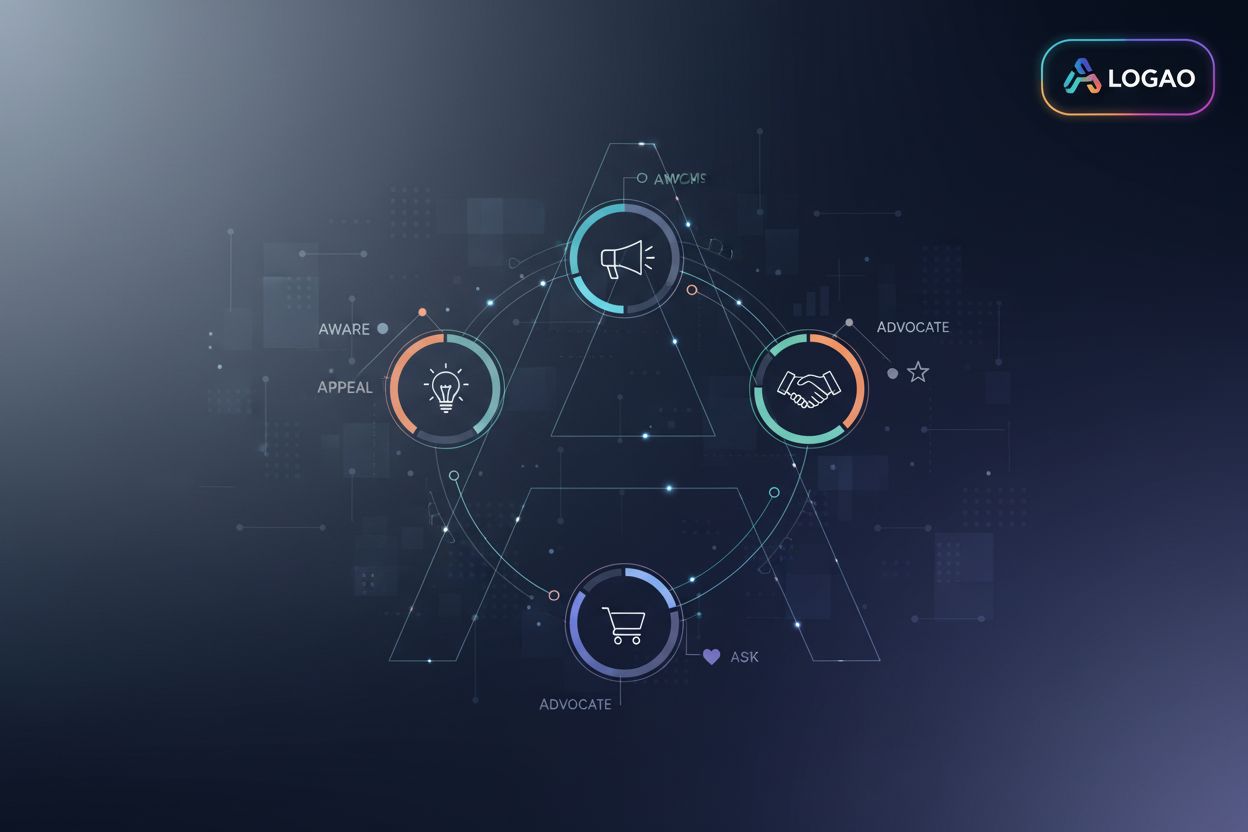
According to a 2023 report by Think with Google, the "messy middle" of the buying journey is where most brands lose people because they’re still stuck in old-school thinking. To fix this, we look to the 5A Framework, originally introduced by Philip Kotler in his book Marketing 4.0. It breaks the journey into five stages:
- Aware: The customer learns about your brand (the "I know" stage).
- Appeal: The customer likes what they see and gets curious (the "I like" stage).
- Ask: The customer researches and asks for opinions (the "I’m convinced?" stage).
- Act: The customer finally buys or signs up (the "I’m buying" stage).
- Advocate: The customer loves the brand so much they tell others (the "I recommend" stage).
- Linearity is a myth: In healthcare, a patient doesn't just see an ad and book surgery. They loop through forums, insurance portals, and reviews.
- The power of the "Ask": We don't trust brands anymore; we trust our peers. Social media makes "asking" a huge part of the process.
- Advocacy is the new goal: In SaaS or finance, getting the sale (Action) isn't the end. If they don't tell their friends (Advocate), your customer acquisition cost stays way too high.

It’s not a straight line anymore, it’s more like a web. If you aren't accounting for that "Ask" phase where people go digging for the truth, you're basically shouting into a void.
Breaking down the 5A framework layers
Ever feel like your brand is just a face in a crowd of millions? It’s tough because today, being "seen" isn't the same as being "noticed," and moving someone from a quick glance to an actual purchase is a whole different beast.
The first two stages—Aware and Appeal—are really about that initial spark. Awareness is pretty straightforward; it’s when a customer knows you exist. But Appeal is where the magic (and the hard work) happens. This is where you go from "just another logo" to "something I actually want."
In industries like healthcare, awareness might come from a simple search for symptoms. But appeal is built through trust and visual storytelling. If a clinic's website looks like it was built in 1998, nobody is going to feel "appealed" to, no matter how good the doctors are.
- Visual storytelling is king: You gotta use design to tell a story fast. For a fintech app, this means clean ui that screams "your money is safe but also easy to manage."
- The ai factor: Using ai for targeting helps you show up exactly when people are looking. It’s not just about broad ads; it’s about predictive modeling so you're in the right feed at the right time.
- Brand consistency: If your Instagram looks like a party but your website looks like a funeral, you lose that appeal instantly.
A 2024 report by Salesforce found that 80% of customers say the experience a company provides is as important as its products. That experience starts right at the "Appeal" phase. If you mess up the vibe here, they won't even bother with the next step.
Once that appeal is established, the customer's natural instinct is to validate that feeling through research—this is where they enter the "Ask" phase. They start digging. They’re checking reviews, asking friends on WhatsApp, or looking for a demo. If your ui/ux isn't optimized for this, you're toast.
In B2B SaaS, the "Ask" phase often involves looking for documentation or api specs. If those are hard to find, the journey ends right there. You want to make it easy for them to find the "truth" about you.
- Optimize for the 'Ask': Make sure your community management is on point. When people ask questions on your social posts, answer them! That’s literally part of the conversion funnel now.
- Social proof as a tool: Displaying real-time reviews helps satisfy the "Ask" without them even leaving your site.

- Frictionless 'Act': Once they decide to buy, don't make them fill out fifteen form fields. Whether it's retail or insurance, the "Act" should be as few clicks as possible.
Honestly, if you can bridge the gap between someone being interested and someone actually clicking "buy" by removing just a few hurdles, you're already ahead of most of your competition.
Advocacy is the ultimate goal for brands
Getting a customer to click "buy" is great for your monthly report, but honestly? It's just the start of the real work. If they don't go out and tell someone else how awesome you are, you're basically stuck on a treadmill of paying for every single lead you get.
The goal is Advocacy. This is when your customers become your unpaid sales force. In the 5A framework, this is the "holy grail" because it feeds right back into the "Ask" phase for new people. It’s a loop, not a line.
At GetDigitize, we focus on making sure your brand doesn't just look good during the sale, but stays top-of-mind afterward. If your post-purchase emails are boring or your app's ux is clunky, nobody is going to brag about you.
- Consistency builds trust: We help brands stay tight across all channels. If a retail customer has a great in-store vibe but the website feels like a scam, they won't advocate for you.
- Content that's "Shareable": It’s about creating moments, not just ads. Think of a finance app that gives you a "year in review" graphic. People love sharing those because it says something about them.
- Measuring the win: A 2023 study by Edelman found that 59% of people will advocate for brands they fully trust. We track this through referral rates, social mentions, and the industry standard—Net Promoter Score (NPS). Tracking Customer Lifetime Value (CLV) is also huge here to see if advocacy is actually paying off.

In healthcare, advocacy might look like a patient leaving a glowing review on a portal. For a b2b brand, it’s a ceo mentioning your api in a LinkedIn post. These "organic" mentions are worth ten times what you spend on ppc.
Implementing 5A in your digital roadmap
So, you’ve got the theory down, but how do you actually bake this into your daily grind without losing your mind? It’s one thing to talk about "advocacy," but it’s another to actually build a tech stack that makes it happen.
Moving people through these stages manually is a nightmare. You need tools that talk to each other.
- AI for Appeal: Use predictive modeling to show the right content to the right person before they even know they want it.
- Mobile-First UX for the Ask: Most research happens on phones. If your site is slow or hard to navigate on mobile, you lose them during the "Ask" phase.
- Automation for the Act: For the Act phase, I'm a huge fan of using email marketing automation that triggers based on real behavior. If someone leaves a cart full of stuff, an automated nudge is basic—but a personalized "how can we help?" message is 5A gold.
- NPS for Advocacy: Use automated surveys after a purchase to measure your advocacy levels immediately.
A 2024 report by HubSpot found that 45% of marketers now use automation to personalize the customer journey, which is a massive jump from previous years as brands try to scale that human touch.
We gotta talk about the elephant in the room: privacy. When you're using ai to predict what a customer wants before they even know it, you’re walking a thin line. Nobody likes feeling stalked. Best practice? Be transparent. If you're using data to improve their experience, let them know. It builds that trust we talked about earlier.

At the end of the day, the 5A framework is just a map. You're the one driving. Keep it simple, keep it human, and don't be afraid to tweak your roadmap as you go. Happy marketing!