What is the 7C Framework of Digital Marketing?
TL;DR
- The 7C Framework of Digital Marketing is explored in this article. It covers customer, content, context, community, convenience, communication, and commerce. Learn how integrating these elements can lead to a more effective digital marketing strategy and enhanced brand experiences.
Introduction to the 7C Framework
Marketing frameworks, right? Some people think they're just fancy flowcharts, but honestly, they're way more important then that. They keeps your strategy from turning into a total mess.
Well, it's not some ancient secret, but it's a pretty solid way to think about digital marketing. The 7C Framework is, at its core, a comprehensive approach to make sure your digital strategy actually, you know, works. It covers seven key areas that, when aligned, help your digital efforts hit the mark. (How to Effectively Implement the 7 Cs of Digital Marketing? - DevriX)
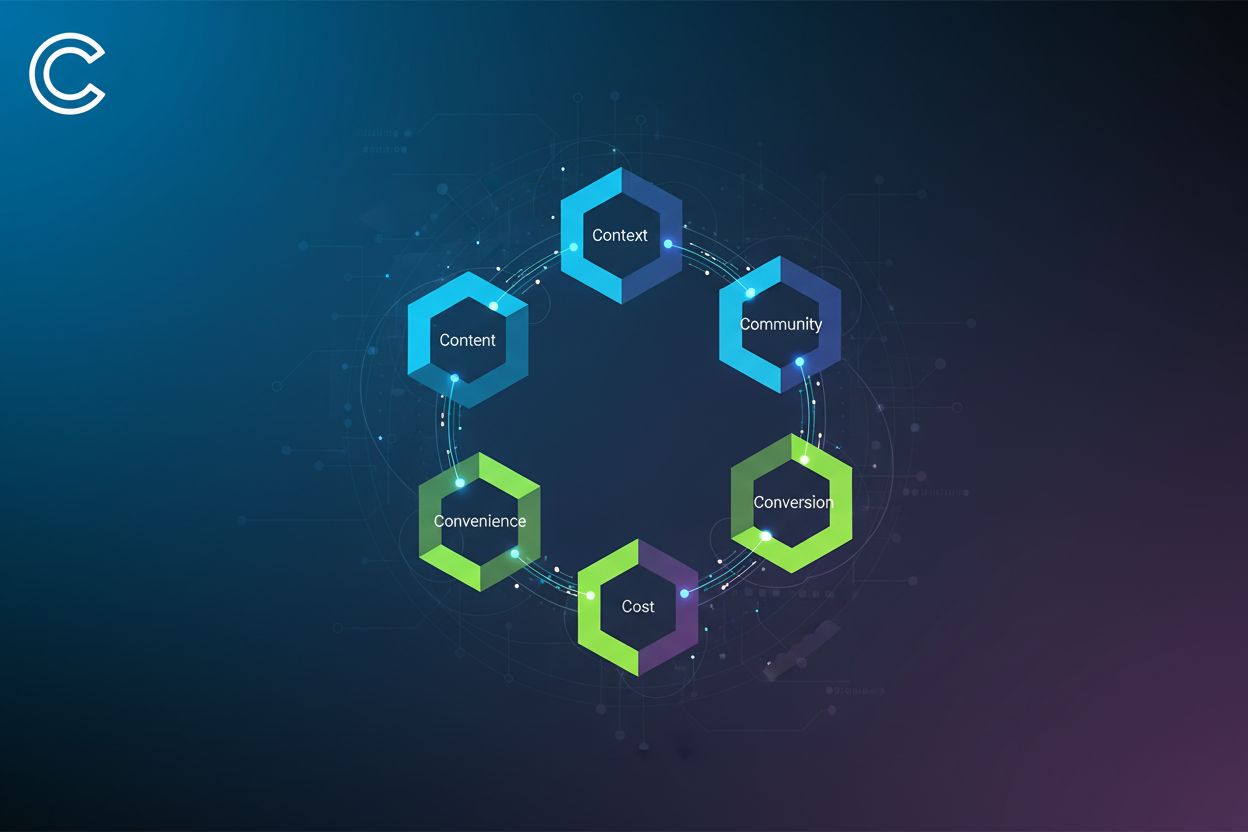
Here's what those seven Cs stand for:
- Customer: Gotta start here, right? Understanding their needs, behaviors, and how they interact with your brand online. For example, a healthcare provider could analyze patient data to personalize their digital communication, ensuring that patients receive relevant health tips and appointment reminders.
- Content: Creating engaging and valuable stuff that attracts and retains customers. Think beyond just blog posts – interactive quizzes, videos, infographics, all that jazz. A financial services firm might create a series of explainer videos breaking down complex investment strategies.
- Context: Considering the environment where your marketing is happening. This is stuff like, what device are they using? Where are they located? What time of day is it? A retailer might use geolocation data to send targeted promotions to customers who are near their stores.
- Community: Building a loyal following around your brand. This means fostering engagement, encouraging user-generated content, and creating a sense of belonging. A beauty brand might create a Facebook group where customers can share tips, ask questions, and connect with each other.
- Convenience: Making it super easy for customers to find what they need and complete their goals, because if it's not easy they will leave. Streamlining the user experience on your website and mobile app is key. An e-commerce platform might offer one-click checkout or personalized product recommendations to make the purchasing process more convenient.
- Communication: Engaging with customers through various channels, both proactively and reactively. This means responding to comments on social media, answering emails promptly, and providing excellent customer service. A software company might use live chat to provide real-time support to customers who are experiencing technical issues.
- Commerce: Ultimately, driving sales and revenue. This means optimizing your website for conversions, offering compelling promotions, and making it easy for customers to make a purchase. A subscription box service might offer a free trial or a discount on the first month to encourage customers to sign up.
Get it? Each "C" plays a role in the thing, and they all work together.
Now that we've got the basics down, let's dive into the core elements of the framework. We'll see how to really nail down each of these Cs.
The 7Cs Explained: Core Elements
Okay, so you're thinking about your digital marketing. But does it even make sense for your customers? A lot of companies skip this step, and honestly, it's like building a house on sand.
The 7Cs Framework isn't just about throwing spaghetti at the wall and seeing what sticks. It's about being strategic. And, yeah, the core elements are pretty crucial. We're talking about the foundational pieces that make or break whether your digital marketing efforts are actually worth it.
Importance of a customer-centric approach: You've got to put the customer first. I mean, duh, right? But it's more than just lip service. It's about genuinely understanding their needs, desires, and pain points. It's about figuring out what makes them tick. Think of it this way: would you rather talk at someone or with them? A customer-centric approach is all about that conversation.
- For example, imagine a small bakery trying to boost online sales. Instead of just posting pictures of pastries, they could run polls on Instagram asking customers what new flavors they'd like to see. Or, they could create a loyalty program that rewards frequent buyers with exclusive discounts. That's customer-centricity in action.
Using data analytics to understand customer behavior: Data isn't just for nerds in basements anymore. Sorry, nerds in basements, but it's true! It's a goldmine of information about your customers. What are they searching for? What pages are they visiting on your site? How long are they staying? All this data can help you fine-tune your marketing efforts.
- A clothing retailer, for instance, could use data analytics to track which products are most popular among different age groups. They could then use this information to create targeted ads on social media, showing each group the products they're most likely to buy.
Creating customer personas for targeted marketing: Personas are like fictional representations of your ideal customers. They're based on research and data, and they help you visualize who you're talking to. What are their goals? What are their challenges? What are their favorite cat memes? Okay, maybe not the cat memes, but you get the idea.
- Like, a financial planning firm might create personas for young professionals, families with children, and retirees. Each persona would have different financial goals and concerns, and the firm could then tailor its marketing messages to each group. This is a basic example, but it shows you that if you don't know who you are talking to, how are you going to craft the right message.
Content marketing strategy and its role: Content is king, queen, and the whole royal court, honestly. It's the fuel that drives your digital marketing engine. But you can't just churn out any old content. It needs to be valuable, engaging, and relevant to your audience. Think blog posts, videos, infographics, podcasts – whatever floats your boat (and resonates with your customers). Content is crucial because it educates, entertains, and builds trust, acting as the primary way you attract and engage your target audience without directly selling.
- A software company might create a series of blog posts explaining how to use its products to solve common business problems. Or, they could create a video tutorial showing users how to get the most out of its features.
Types of content: blogs, videos, infographics: Variety is the spice of life, and it's also the key to a successful content marketing strategy. Don't just stick to one type of content. Mix it up! Some people prefer to read, while others prefer to watch videos. Some people love infographics, while others find them overwhelming. Cater to different preferences.
- A travel agency could create blog posts about different travel destinations, videos showcasing beautiful scenery, and infographics highlighting the best travel deals.
Content calendar planning and distribution: Don't just create content willy-nilly. Have a plan! A content calendar helps you organize your content creation efforts and ensures that you're consistently publishing new material. It also helps you distribute your content across different channels, like social media, email, and your website.
- A food blogger might use a content calendar to plan out their recipes for the month, scheduling posts for different days of the week. They could also use the calendar to plan out their social media promotions, ensuring that each post is timed to coincide with a relevant event or holiday.
Understanding the customer journey: The customer journey is the path that a customer takes from initial awareness to final purchase. It's important to understand this journey so that you can deliver the right message at the right time. What are their touch points? What are their needs at each stage?
- For instance, someone researching a new car might start by reading online reviews, then visiting a dealership for a test drive, and finally negotiating the price with a salesperson.
Personalization and contextual marketing: Generic marketing is dead. People want personalized experiences. They want to feel like you're talking directly to them. Contextual marketing is all about delivering the right message to the right person at the right time, based on their location, behavior, and preferences.
- An e-commerce store could send personalized product recommendations to customers based on their past purchases. Or, they could send a discount code to customers who have abandoned their shopping carts.
Using location-based marketing: Location, location, location! It's not just important in real estate. It's also important in marketing. Location-based marketing allows you to target customers based on their physical location.
- A restaurant could send a push notification to customers who are near their location, offering them a lunch special. Or, a retailer could send a text message to customers who are in their store, alerting them to a sale.
Importance of social media communities: Social media isn't just a place to broadcast your message. It's a place to build relationships and engage with your customers. Create a community around your brand. Encourage your customers to connect with each other.
- A gaming company might create a forum where players can discuss their favorite games, share tips, and provide feedback. Or, a fitness brand might create a Facebook group where customers can share their workout routines, ask questions, and support each other.
Community management strategies: Building a community is one thing. Managing it is another. You need to have a plan for how you're going to moderate your community, respond to comments, and handle conflicts.
- A non-profit organization might assign a dedicated community manager to monitor its social media channels, respond to inquiries, and address any concerns.
Fostering brand loyalty through community engagement: A strong community can foster brand loyalty. When customers feel like they're part of something bigger than themselves, they're more likely to stick around.
- A coffee shop might host regular events for its customers, like live music performances or trivia nights. Or, a clothing brand might partner with influencers to create exclusive content for its community.
User experience (UX) and user interface (UI) design: Your website and mobile app should be easy to use. Like, really easy. If customers have to struggle to find what they need, they're going to leave. UX and UI design are all about creating a seamless and intuitive experience for your users. Good UX/UI means clear navigation, fast loading times, intuitive layouts, and minimal friction points, making it effortless for users to achieve their goals.
Mobile-first design approach: It's 2024! Most people are browsing the web on their phones. If your website isn't mobile-friendly, you're missing out on a huge opportunity. A mobile-first design approach means designing for mobile devices first, then adapting your design for desktops.
Streamlining the purchasing process: Make it easy for customers to buy from you. Reduce the number of steps required to complete a purchase. Offer multiple payment options. Provide clear and concise product descriptions.
Two-way communication and feedback: Marketing isn't a one-way street. It's a conversation. Encourage your customers to provide feedback. Listen to what they have to say. Respond to their comments and concerns.
Social listening and sentiment analysis: Social listening is the process of monitoring social media channels for mentions of your brand. Sentiment analysis is the process of determining the emotional tone of those mentions. Are people saying good things or bad things about your brand?
Crisis communication strategies: Stuff happens. Sometimes, things go wrong. When they do, you need to have a plan for how you're going to communicate with your customers. A crisis communication strategy can help you manage the situation and protect your brand reputation.
E-commerce strategies and optimization: Selling online is different than selling in a brick-and-mortar store. You need to have a solid e-commerce strategy. Optimize your website for conversions. Offer compelling promotions. Make it easy for customers to make a purchase.
Payment gateways and security: Security is crucial when it comes to online transactions. You need to use a secure payment gateway to protect your customers' financial information.
Conversion rate optimization (CRO): CRO is the process of increasing the percentage of website visitors who complete a desired action, such as making a purchase or filling out a form.
So, yeah that's it for the "Core Elements" of the 7Cs framework. Now, let's get into how to make these elements actually work together.
Implementing the 7C Framework in Your Digital Strategy
Okay, so you've bought into this whole 7C Framework thing, great! But how do you actually use it? It's not just about knowing what the "Cs" are, it's about weaving them into your entire digital strategy. And trust me, there's a right way and a whole lot of wrong ways to do it.
Assessing your current digital marketing efforts: First things first, take a good, hard look at what you're already doing. What's working? What's flopping like a fish out of water? Don't be afraid to be brutally honest. It's like decluttering your house before you redecorate, you know? If you don't know whats going on now, how will you ever know if you are improving?
- For example, a small e-commerce business might analyze their website traffic, social media engagement, and conversion rates to see where they're succeeding and where they're falling short.
Identifying gaps and opportunities: This is where you start to see how the 7C Framework can fill in the blanks. Are you really putting the customer first? Is your content actually engaging? Are you making it easy for people to buy from you? Find those weak spots, and that's where you focus.
- A healthcare provider might realize that their website isn't very mobile-friendly, making it difficult for patients to book appointments on the go. That's a gap!
Setting measurable goals and KPIs: “Increase engagement” isn't a goal, it's a wish. You need real, concrete numbers. What does success actually look like? How will you know when you've arrived? Think in terms of specific, measurable, achievable, relevant, and time-bound (SMART) goals.
- A financial services firm might set a goal to increase website traffic by 20% in the next quarter or to increase lead generation by 15% in the next month.
Martech solutions for each 'c': Lucky for us, there's a tool for pretty much everything these days. CRM systems can help you manage customer relationships, content management systems (CMS) can help you create and distribute content, and marketing automation platforms can help you streamline your marketing efforts.
Customer: CRM (Customer Relationship Management) systems like HubSpot or Salesforce are perfect for tracking interactions and personalizing communication.
Content: CMS (Content Management Systems) like WordPress or Drupal help you create, manage, and publish content efficiently.
Commerce: E-commerce platforms like Shopify or WooCommerce are essential for online sales.
Communication: Email marketing platforms (e.g., Mailchimp, Constant Contact) and social media management tools (e.g., Buffer, Hootsuite) facilitate outreach and engagement.
Convenience: Website analytics tools (e.g., Google Analytics) and A/B testing software help optimize user journeys.
Community: Forum software or dedicated community platforms can foster engagement.
Context: Geolocation tools and website personalization engines can tailor experiences based on user context.
For example, a retailer might use a CRM like Salesforce to track customer interactions, personalize marketing messages, and manage customer service requests.
Data analytics platforms: You can't improve what you can't measure. So, you need to be tracking, like, everything. These platforms let you see what's working and what's not, so you can adjust your strategy accordingly.
- A software company might use Google Analytics to track website traffic, user behavior, and conversion rates.
Automation tools for efficiency: Doing everything manually is a recipe for burnout. Automation tools can help you streamline repetitive tasks, so you can focus on the stuff that actually matters.
- A subscription box service might use an email marketing automation platform like Mailchimp to send personalized welcome emails, abandoned cart reminders, and promotional offers.
Let's look at how a local restaurant might use the 7C framework:
- Customer: They identify their target customer as young professionals and families living nearby.
- Content: They create blog posts about local events and recipes using local ingredients.
- Context: They use geolocation data to send push notifications to customers who are near their restaurant during lunchtime.
- Community: They host weekly trivia nights and create a Facebook group where customers can share photos of their meals.
- Convenience: They offer online ordering and delivery through their website and mobile app.
- Communication: They respond to customer reviews on Yelp and social media, and they send out email newsletters with special offers.
- Commerce: They offer a loyalty program that rewards frequent customers with discounts and freebies.
See how all the "Cs" work together to create a cohesive and effective marketing strategy?
So, you've got the "what" and the "why," and now you know the "how." Next up, we'll look at some challenges and future trends.
Challenges and Future Trends
Okay, so you think you've got the 7C Framework down? Well, hold on a sec – it's not all sunshine and rainbows, ya know. There's some stuff that can trip you up if you're not careful. And, like, the world is changing faster than ever, so you gotta keep up!
Overlooking one or more 'c's: It's easy to get tunnel vision and focus on, say, content, but forget about community. But remember, they're all connected. Like, a retail company might pump out killer blog posts (content) but totally ignore customer comments on social media (communication), which is a surefire way to alienate people.
Lack of integration between elements: Just having all the "Cs" present doesn't mean they're working together. A financial institution might have a slick website (convenience) and a bustling Facebook page (community) but fail to connect the two, missing opportunities to guide customers through the sales funnel. They need to sync up.
Failing to adapt to changing customer behavior: What worked last year might not work today. Remember when everyone was obsessed with QR codes and how they failed? You need to be constantly monitoring trends and tweaking your strategy. A healthcare provider offering telehealth services needs to stay on top of evolving patient expectations and technology preferences – are they all about video calls, or do they prefer asynchronous messaging?
The role of ai and machine learning: ai isn't just a buzzword anymore, it's a game-changer. ai can help you personalize content, automate communication, and even predict customer behavior.
- Personalization: ai can analyze vast amounts of data to tailor content, offers, and recommendations to individual customers.
- Automation: ai-powered chatbots can handle customer inquiries 24/7, freeing up human agents for more complex issues.
- Predictive Analytics: ai can forecast customer needs and behaviors, allowing for proactive marketing strategies.
- Content Creation: ai tools can assist in generating marketing copy, social media posts, and even video scripts.
Emerging technologies and their implications: Think about things like augmented reality (ar) and virtual reality (vr). How can you use these technologies to create more immersive and engaging customer experiences? A furniture retailer, for instance, could use ar to let customers see how a couch would look in their living room before they buy it. Other examples include virtual try-ons for clothing or immersive brand storytelling experiences.
The evolving digital landscape: New platforms and channels are popping up all the time. You need to be ready to experiment and adapt. It's like, remember when TikTok was just for teenagers doing dances? Now, brands are using it to reach all sorts of audiences. This means staying curious and willing to explore new avenues for reaching your customers.
So, yeah, the 7C Framework is a solid foundation, but it's not a set-it-and-forget-it thing. You gotta stay agile, keep learning, and be ready to adapt to whatever comes next. Now, let's wrap this up with some key takeaways!
Conclusion
So, you've made it this far – congrats! I know, frameworks can sometimes feel like a slog, but hopefully, you're seeing how the 7C Framework can actually make your digital marketing better.
Let's do a quick rewind, shall we? The 7C Framework, at its heart, is about making sure your digital strategy is firing on all cylinders. You got your Customer, making sure you actually know who you're talking to. Then there's Content, because nobody wants to read boring stuff. Context is key – knowing where and when people are seeing your message. And, of course, Community – because a loyal fanbase is worth its weight in gold. Don't forget Convenience, because nobody wants to jump through hoops to buy something. Communication is all about keeping the conversation going, and finally, Commerce, because, well, you gotta make money, right?
- It's not enough to just have each of these elements. You need to think about how they all connect. A common mistake is when a company has great content, but their customer service is terrible. That disconnect can kill your brand faster than you think. Think of it like this: a software company might have amazing video tutorials (content) and a super user-friendly website (convenience) but if their customer support team takes days to respond to emails (communication), customers get frustrated and leave. This applies to many business types, not just software.
- Think about it: You can't just set it and forget it. Digital marketing is a constantly evolving landscape. What worked last year might not work today. You have to be willing to adapt, experiment, and try new things. The companies that thrive are the ones that are always learning and growing. A retail business, for example, might find that their Instagram ads are killing it one month, but then the algorithm changes, and suddenly their reach plummets. They need to be ready to pivot to a new platform or try a different ad strategy.
So, yeah, the 7C Framework isn't a magic bullet. But it is a solid foundation for building a successful digital strategy. And honestly, in a world where marketing tactics come and go faster than ever, having a framework like this can keep you grounded.
- The need for constant change. Technology is moving so fast, it's hard to keep up. ai and machine learning are already transforming the way we do marketing, and who knows what's next? Augmented reality? Virtual reality? Brain implants that beam ads directly into our heads? Okay, maybe not that last one (yet), but you get the idea. The future will likely involve even more sophisticated personalization, immersive experiences, and automated customer interactions.
- Don't just read this article and nod your head. Go out there and use the 7C Framework! Take a look at your own digital marketing efforts. Where are you strong? Where are you weak? What can you do to improve? A good starting point is to create a simple checklist for each 'C' and score yourself. Then, identify one or two areas to focus on improving first. And remember, it's not about being perfect, it's about being better. So, go out there and make it happen! Start implementing, start testing and start collecting feedback.